



Latest events
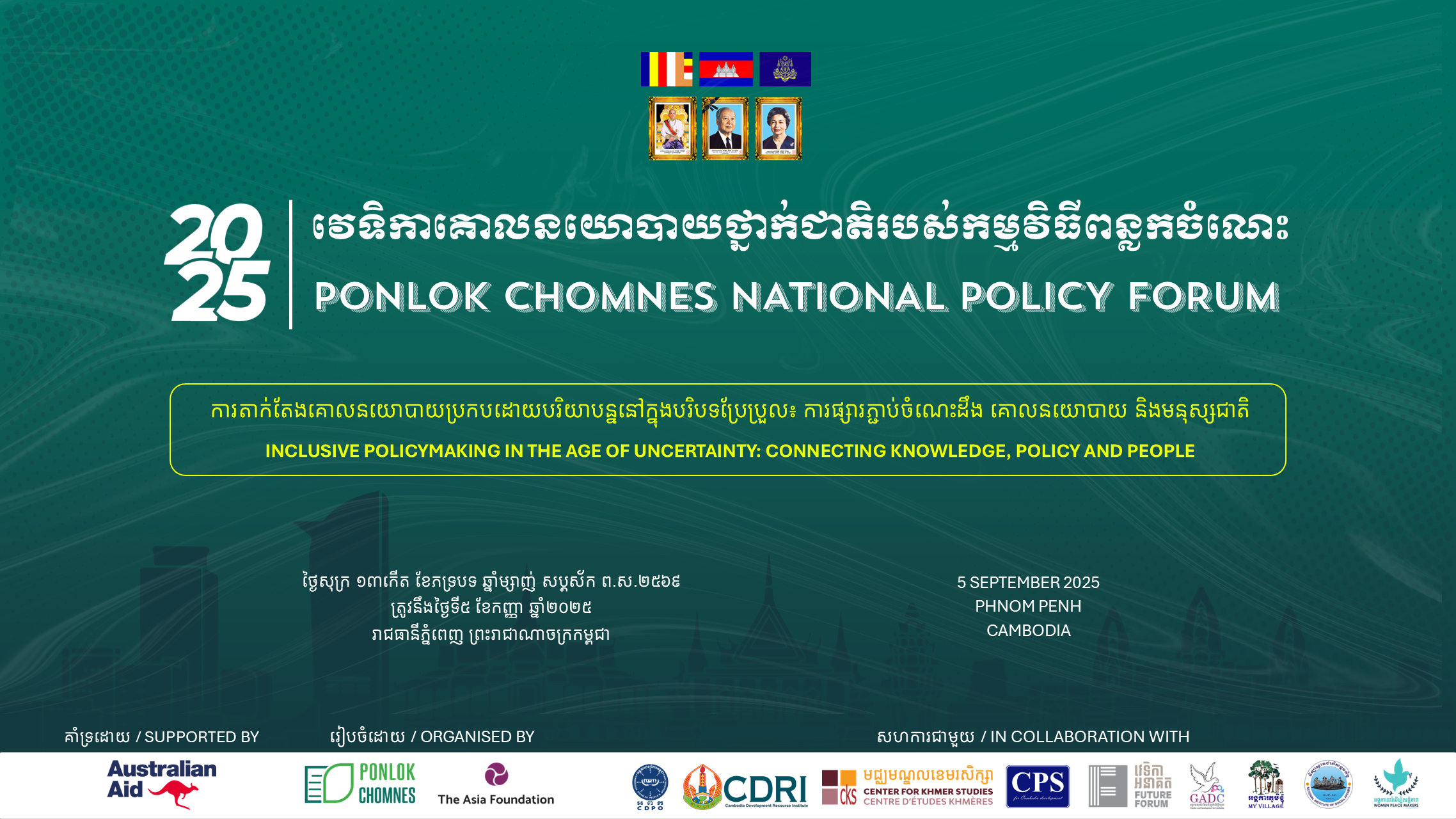
- Date: Friday, 5 September 2025
- Time: 8:00 am > 5:00 pm
- Attending: 0
- Location: Phnom Penh
Introduction
Cambodia’s policy landscape is undergoing a significant transformation, highlighting an increasing need for evidence-based decision-making and collaborative policy processes. The Australian Government is proud to support the strengthening of collaboration between policy actors and researchers and to promote inclusive policy processes through the Ponlok Chomnes II: Data and Dialogue for Development in Cambodia Program (July 2023- June 2027), implemented by The Asia Foundation.
Under the Pentagonal Strategy Phase I and the National Strategic Development Plan, the Royal Government of Cambodia (RGC) is actively seeking to integrate data, research, and evaluation into policymaking processes. The adoption of key national strategies in 2024, such as Neary Rattanak VI on gender equality, the new National Disability Strategic Plan, National Social Protection Policy Framework 2024–2035, and the NDC 3.0 on climate action further demonstrates Cambodia’s commitment to inclusive development. The National Research Agenda 2025, while primarily focused on science, technology, and innovation, also reflects a growing recognition of the importance of research to support national priorities. The government’s increasing demand for inclusive data indicates the value of enhancing the integration of the knowledge sector. These policies and openness create meaningful opportunities for collaboration between government institutions, civil society, and research actors. In particular, facilitating both the growing demand for research, data, and meaningful policy dialogue, and the supply of timely, credible, and accessible evidence grounded in inclusive consultation.
While Cambodia’s knowledge sector. has become more active, with government and local institutions producing useful research outputs, there is still room for improvement in how government and non-government actors work together. In times of uncertainty, this collaboration plays a significant role in the ability of institutions to adapt to emerging challenges and ensure policies are responsive and reflective of the needs of underrepresented groups, such as women, youth, ethnic minorities, and persons with disabilities.
Over the past year, Ponlok Chomnes has worked with a network of nearly 20 local think tanks and research institutions to promote inclusive dialogue, quality research, and the integration of Gender Equality, Disability, and Social Inclusion (GEDSI) across research, communications, and engagements.
Therefore, now is the right time to convene a national forum to explore opportunities for deeper collaboration between research institutions, policy actors, and communities. Building on the legacy of national policy forums under Ponlok Chomnes Phase I, the 2025 National Policy Forum will spotlight Cambodia’s evolving knowledge sector and explore how the research sector can work more closely with RGC to strengthen inclusive policy processes in Cambodia.
Objectives
- Foster collaboration between research institutions, policy actors, and communities and provide a platform for discussion on strengthening inclusive, evidence-informed policymaking in Cambodia.
- Explore opportunities for integrating research and data into national policy processes, particularly within the context of new national strategies on gender, disability, and climate change.
- Identify solutions to key challenges in the knowledge-policy ecosystem, facilitating the demand for evidence and the supply of timely, credible, and accessible research.
- Elevate diverse voices in policy dialogue, ensuring the inclusion of perspectives from women, youth, persons with disabilities, and ethnic minorities in shaping policy priorities.
- Recognise outstanding contributions to inclusive policymaking by celebrating the winners of the Inclusive Awards.
Participants
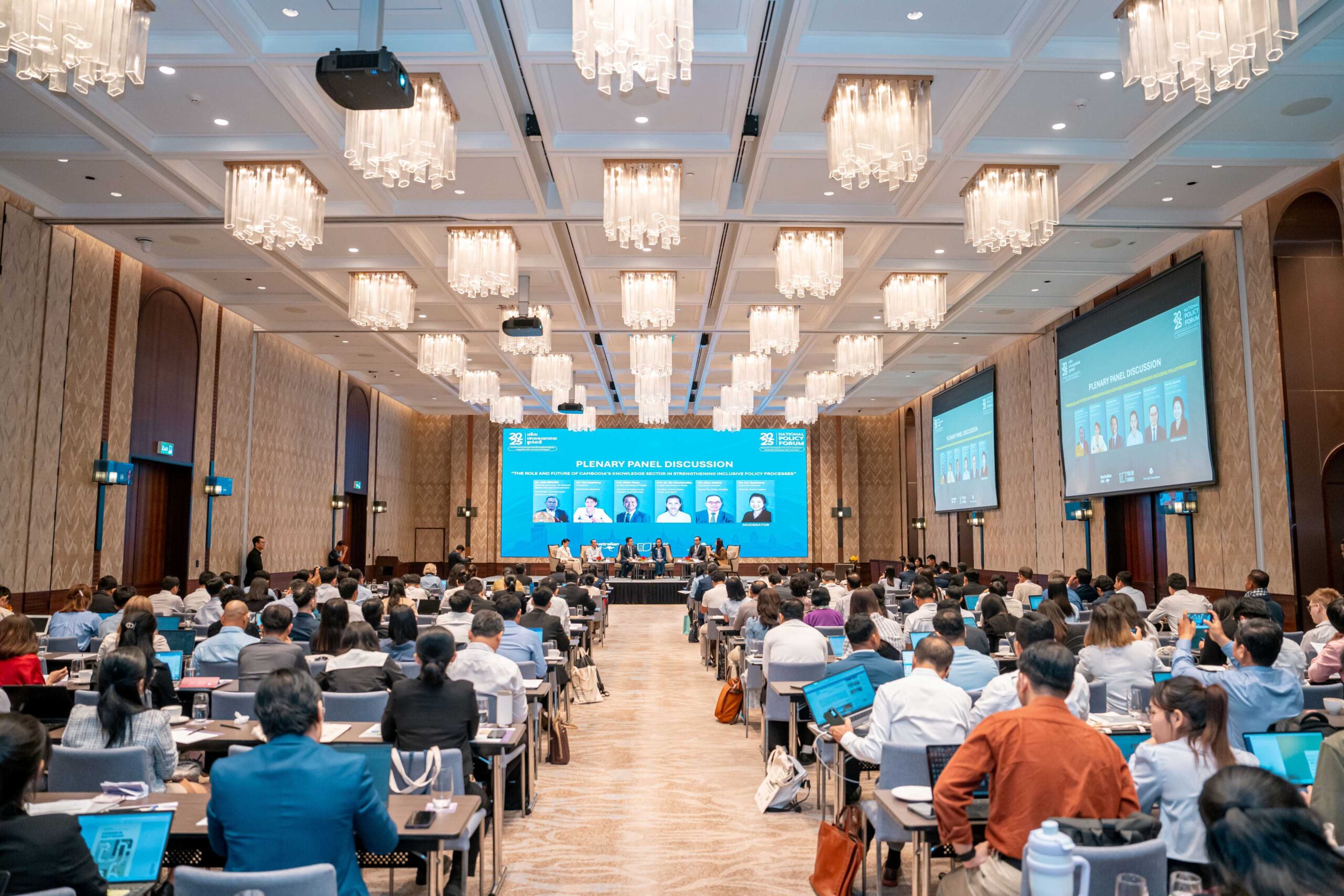
About 200 participants joined the forum with a targeted and balanced mix of actors who are directly involved in or influential within Cambodia’s policy and knowledge ecosystems, including:
- Government representatives from key ministries and national institutions, particularly those leading the implementation of national strategies on gender, disability, climate change, and social development.
- Members of the PCII Technical Steering Committee (TSC), which includes policy champions and thought leaders who guide the program’s strategic direction.
- Special focus will be placed on Ministry Focal Points involved in policy planning, monitoring and evaluation, and GEDSI integration.
- Ponlok Chomnes II Research Partners, including Strategic, Innovation, Collaboration and Policy Engagement Partners who are actively producing and translating evidence on policy-relevant issues such as social protection, rural development, and climate resilience.
- Civil Society Organisations (CSOs) and GEDSI-focused organisations, including those working to advance the rights of women, youth, persons with disabilities, and ethnic minorities.
- Community representatives and local organisations, particularly those engaged in grassroots policy dialogue and participatory research at the subnational level.
- Representatives from the Australian Embassy in Cambodia, as the founding donors of Ponlok Chomnes II and key supporters of inclusive governance efforts.
- Development partners and donor representatives, including multilateral and bilateral agencies, who are supporting governance, research, and inclusion in Cambodia’s development agenda.
- Private sector representatives from sectors where public-private engagement is crucial for inclusive policy outcomes, such as agriculture, technology, and environmental services.
- Media professionals, including journalists and editors from national outlets, invited to help amplify messages from the forum in line with DFAT and The Asia Foundation’s communications policies.
Key Takeaways
- Government, research institutions, and civil society identified opportunities to integrate research and data into the implementation of Cambodia strategies on gender equality, disability, , and social protection. This strengthens the country’s efforts toward addressing deeply-rooted challenges.
- Diverse voices—including women, youth, ethnic minorities, and persons with disabilities—were elevated in shaping policy priorities. This ensures that policymaking reflects the needs of all groups in society and strengthens the inclusiveness of national strategies.
- The launch of the Ponlok Chomnes Guidelines reinforced commitments to research quality and inclusive dialogue. By setting a clear standard, the Guidelines help improve evidence generation and ensure that research is both credible and relevant to policy decisions.
- The Inclusive Awards recognised outstanding innovations in inclusive research, communication, and dialogue. Celebrating these contributions not only motivates wider adoption of inclusive practices but also builds momentum for more equitable and evidence-based policymaking in Cambodia.
These outcomes strengthen Cambodia’s knowledge-to-policy ecosystem and mark a step toward more inclusive, evidence-based, and resilient policymaking.
Find all photos from the forum here: National Policy Forum 2025
Stay updated via our Telegram channel: https://t.me/PonlokChomnes
Media Coverage
- Australian Embassy in Cambodia / Press Release
- Australian Embassy in Cambodia / Facebook post
- BTV
- Cambodia Investment Review
- Cambodianess / 1
- Cambodianess / 2
- CNC
- Kampuchea Thmey
- Khmer Times / 1
- Khmer Times / 2
- Kiri Post
- Office of the Council of Ministers
- Phnom Penh Post
- The Asia Foundation
- Ponlok Chomnes
Latest updates


