

Latest knowledge products


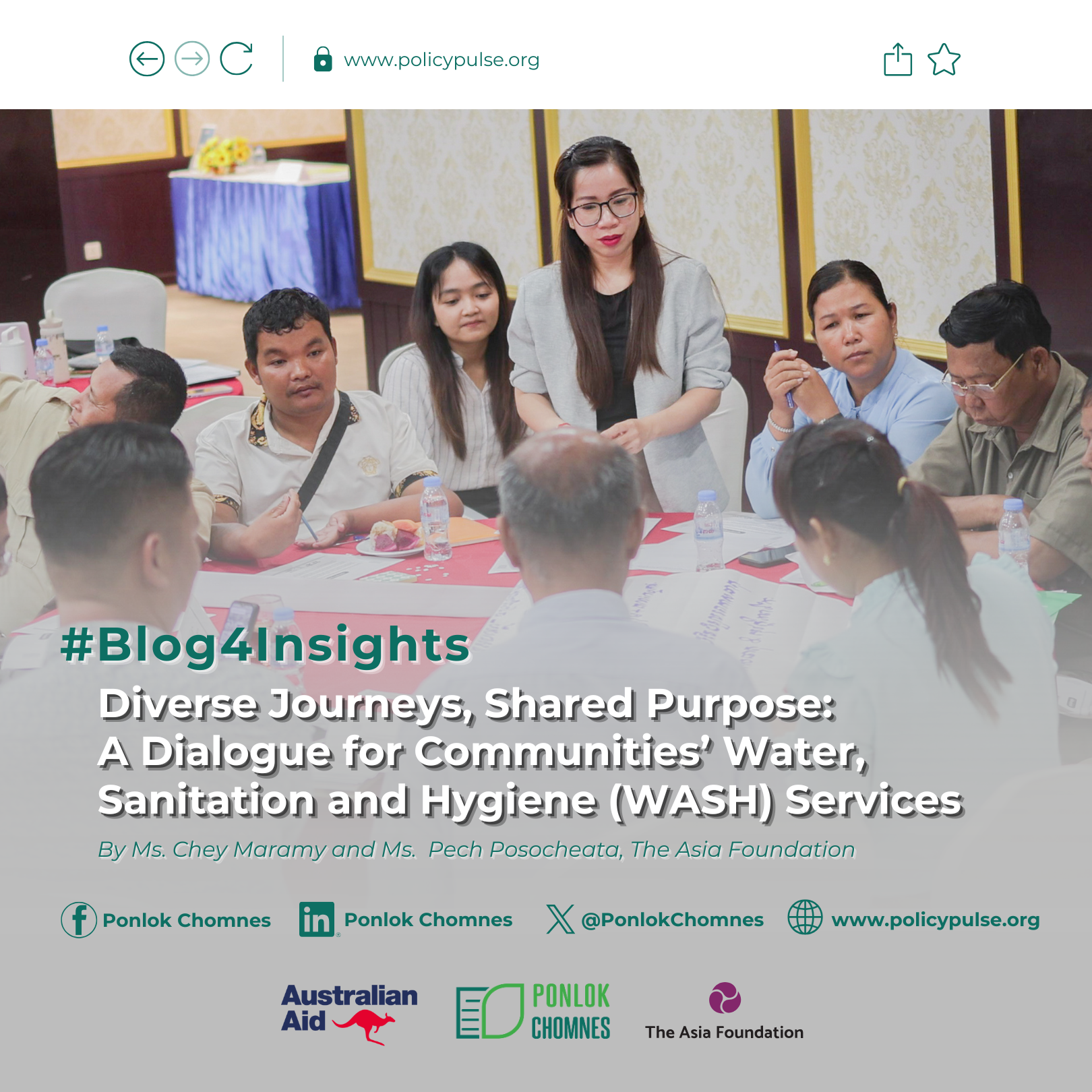
Diverse Journeys, Shared Purpose: A Dialogue for Communities’ Water, Sanitation and Hygiene (WASH) Services
By Ms. Chey Maramy and Ms. Pech Posocheata
Voices from the Ground
“A necessity of life is to have and use clean water and to have sanitation,” said Ms. Soutieng, a water supply service provider in Sameakki Meanchey town, Kampong Chhnang province.
“As a commune chief, I have a vision to ensure that the commune is safe, especially the public health of citizens, which reduces medical costs,” said Ms. Sophea, the Commune Chief of Svay Chuk, Kampong Chhnang province.


Waking up in the early morning on 3 April 2025, Ms. Soutieng and Ms. Sophea, together, travelled roughly 180 kilometres, a 2–3-hour drive from their communities, to attend a subnational dialogue in Pursat province without were excited to share the remarkable experiences of their communities’ water, sanitation, and hygiene (WASH) projects.
Ms. Soutieng is a local water operator passionate about WASH. Invited by the Cambodian Water Supply Association (CWA), Ms. Soutieng was eager to actively participate throughout the event and to share her insights and expertise. With her commitment to enhancing WASH services in her community, she was also interested in learning about the experiences of other communities and to discuss findings of water supply conditions during this dialogue.
Ms. Sophea, a commune leader, attended with similar goals and curiosity and highly appreciated the opportunity to share her experiences and learn from others about WASH services during the dialogue. Holding a sub-national position in Kampong Chhnang province, she is deeply invested in the safety and welfare of her community.

Both Ms. Sophea and Ms. Soutieng joined the sub-national policy dialogue on “Strengthening Climate-Resilient and Inclusive Water, Sanitation and Hygiene (WASH) Services in Local Community” organised by the Cambodia Development Resource Institute (CDRI). This event aimed to present the findings of a study conducted in Kampong Chhnang and Pursat provinces and to collect input from participants.
Evidence-Informed Dialogue
Based on the research1 findings presented by Dr. Ang Raksmey, a researcher from CDRI, 25% of the population in the study area use unclean and contaminated water. One of the barriers to clean water are extreme weather events. The findings underscored the need to hear from various stakeholders, including communities themselves, the authorities, and other institutions, in addressing this critical issue. Ms. Soutieng recalled a water suspension for three days due to a flood in her community in 2022, as well as a lack of water supply due to a drought in 2024.
Sharing how their communities responded to the water suspension in 2022, Ms. Sophea described how the water supply to one village had to be temporarily cut off to ensure another village had access to water. Despite these difficulties, the community adapted by using water containers and wells to manage their needs. On the other hand, the drought in 2024 was addressed by digging more ponds and deepening the existing ponds to store water, according to Ms. Soutieng.
As a responsible leader dedicated to her commune’s well-being, Ms. Sophea stated it is her responsibility to promote essential WASH services and to ensure that the commune’s social services budget is effectively allocated in response to these needs. She added that the existing budget has been broken down into activities, including direct funding toward improving water and sanitation in her commune. However, there is a need for more funding to support these critical social services.

In addition, continuing older practices also posed a challenge to getting communities to adopt updated WASH services. “There are still a number of families that rely on wells as their primary source of water,” said Ms. Soutieng. Due to a limited understanding of WASH, they assume water from wells are the cleanest and safest water available, even if other options are present. Wells are a traditional way of getting water from the ground. Also, wells were advised to be used as a temporary measure in response to the drought in 2024. In this area, well water is not recommended for daily use since the water is not filtered enough. Therefore, training is critical to help communities to understand the importance of safe sources of water.
Innovative dialogue format
Ms. Sophea and Ms. Soutieng have different viewpoints stemming from their differing occupations. Ms. Sophea has attended several training sessions in the past, but this discussion format was her first experience to interact in such a communicative way about these topics. On the other hand, for Ms. Soutieng has joined several similar dialogues, workshops, and training activities regarding these related topics. She also received training abroad to advance her understanding and further explore strategy and development plans for clean water and sanitation improvement. Ms. Soutieng was grateful to be invited to this valuable event. She valued learning, listening, and discussing other practices and experiences. Similarly, with this new understanding, Ms. Sophea is hopeful that she can work towards eliminating open defecation, helping her community achieve a cleaner and healthier environment for all. The workshop was helpful and insightful for both women.
Additionally, collaboration among diverse stakeholders is very important in strengthening the broader WASH community. During the subnational dialogue, an organisation called East Meet West Cambodia (EMW) provided trainings for communities, water suppliers, and toilet constructors on sanitation management specifically for women and girls, which inspired them to take a lead in their communities on sanitation and water management.
This dialogue offered participants opportunities to raise their concerns, enrich their knowledge, and discover new practices. Additionally, they were able to learn about other districts’ climate conditions and organisations’ supporting activities. People with disabilities were also active participants which encouraged diverse engagement and also highlights the organiser’s commitment to inclusion.
Inclusive Dialogue as a Pathway to Shared Action

The information presented by the researchers and the participants in the field highlighted a key message- that there is need for joint action from related groups and policymakers to inform the policy-making process. This dialogue potentially brings a variety of ideas, experiences, and solutions to the table, stressing the commitment of these diverse groups to improving the lives and livelihoods of communities.